
If you’ve ever wondered about French eating habits, you’ve probably found yourself asking the same question so many others have: how do the French eat bread, cheese, butter, and dessert, and still seem to maintain a balanced, slim figure?
It’s something that feels almost contradictory, especially when compared to the diet culture that’s so prevalent in the United States. Here, food is often something we analyze, adjust, and sometimes even avoid altogether. In France, the relationship with food feels much simpler.
And after spending time there, you begin to realize that it’s not about strict rules or restriction.
It’s about a completely different way of approaching food.
They Eat Real, Quality Food
One of the first things you notice in France is how much importance is placed on the quality of ingredients.
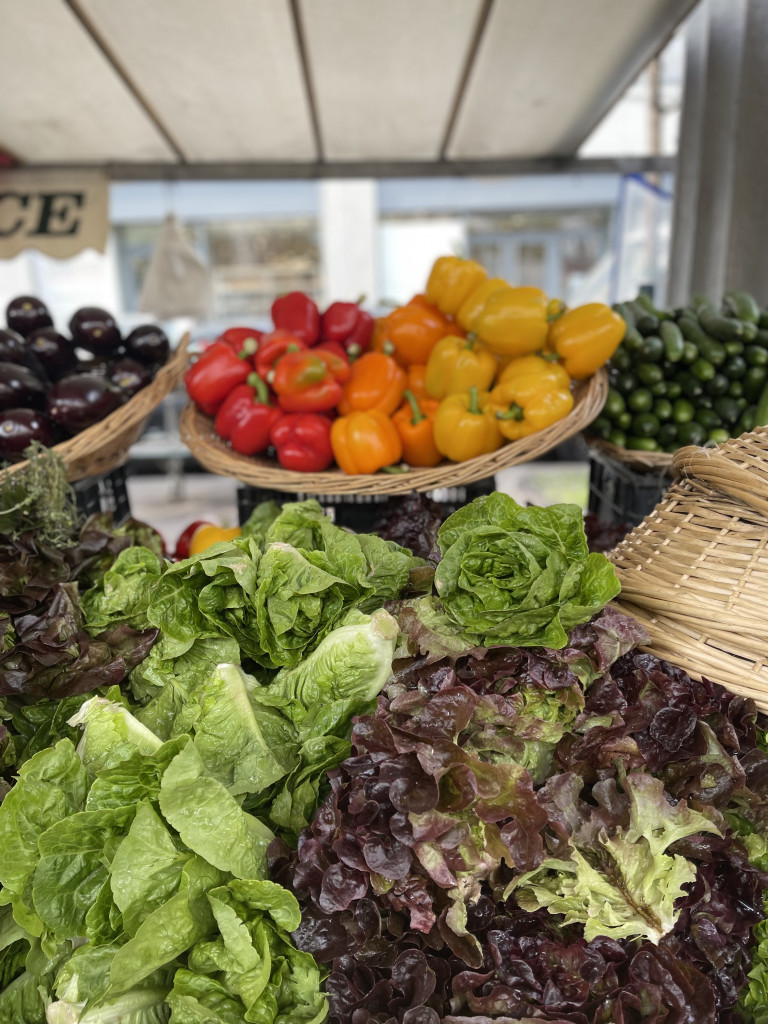
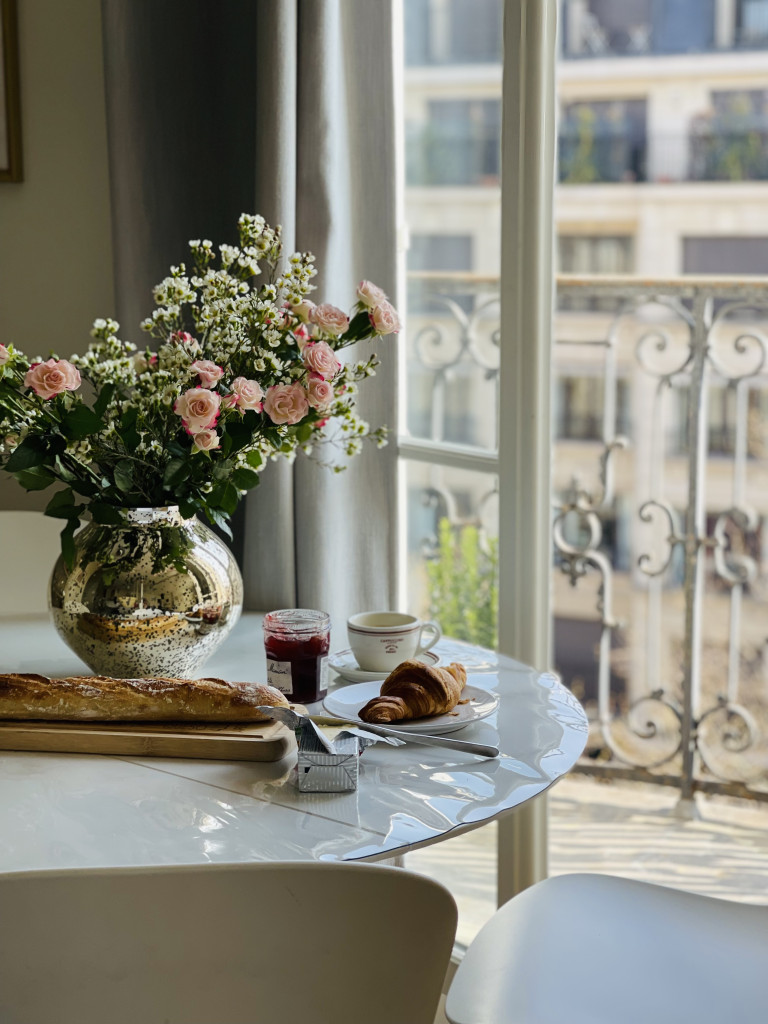
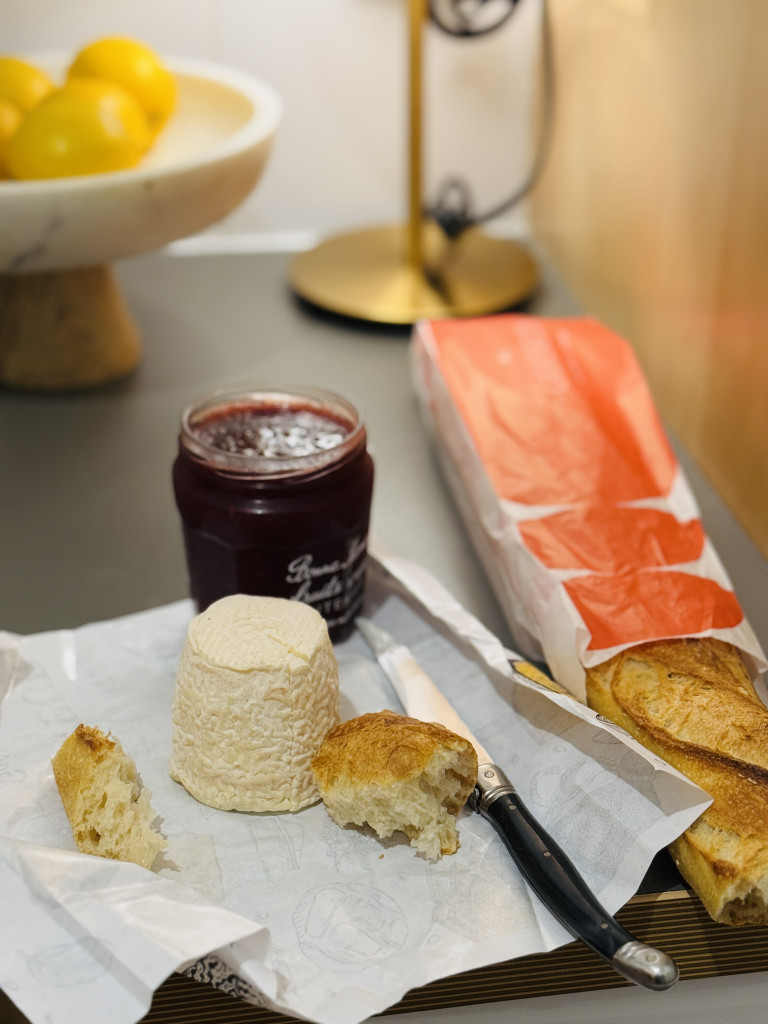
The French don’t tend to rely heavily on processed foods or overly complicated meals. Instead, there’s a focus on simple, fresh ingredients. Produce from the market, good butter, a fresh baguette, a piece of cheese that’s meant to be enjoyed rather than rushed through…these are all highly valued in France.
It’s a way of eating that naturally encourages you to slow down and pay attention.
I’ve noticed this even in my own routine when I shop at the farmers market. When you’re buying something that feels special, whether it’s a perfectly ripe peach or a fresh bunch of strawberries, you approach it differently. You think about how you’re going to use it. You take more care with it.
And because the ingredients themselves are flavorful, there’s less need to overdo anything else.
But if you’re thinking that it’s just the superior food quality and all our food in North America is junk, it isn’t true.
I’m living proof of that. I’ve been at my slimmest in the U.S. eating an incredibly healthy diet filled with fresh produce, lean meats, and whole grains, and I’ve also been at my heaviest in France, eating a diet full of (incredible) cheese, bread, wine, and pastries.
Food quality alone is not the answer. In fact, fast food and processed ingredients are becoming more rampant in France, be it in the form of fast food chain restaurants or ready-made foods in the grocery stores.
They Sit Down and Eat Their Meals
Instead, the French have managed to maintain their figures relatively well do to the rituals and mindset around food and meals.
Something that stands out about French eating habits is how meals are treated.
In the United States, it’s very common to eat while doing something else. Lunch might happen at a desk, dinner in front of the television, or a quick bite grabbed between errands.
In France, meals are much more intentional and mindful.
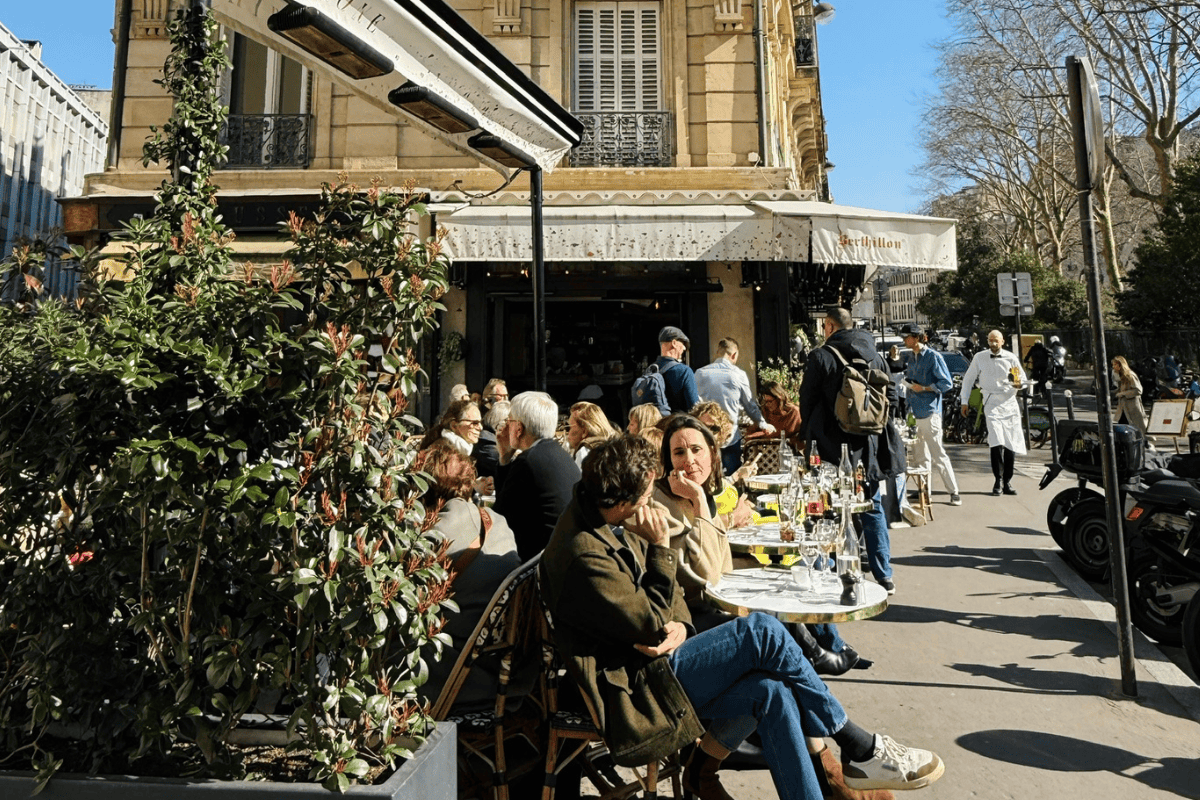
Even a simple lunch is something you sit down for. There’s a clear pause in the day. People take their time, whether they’re eating alone or with others, and there’s less of a sense that the meal needs to be rushed so they can move on to something else.
That shift alone changes the experience of eating.
When you’re sitting down and paying attention to your meal, you naturally eat more slowly. You notice the flavors more. And you become more aware of when you’ve had enough.
This is often referred to as “intuitive eating” and it’s very present in French culture. That’s why you can be an American in France, eating a bunch of cheese and bread, and still gain weight.
Meanwhile ,a French person can have a much smaller portion of cheese and bread, but enjoy it with the same amount of pleasure, and not gain the weight.
They Don’t Snack the Same Way
One of the biggest differences you’ll notice is how much less snacking plays a role in daily life.
In the U.S., it’s easy to fall into a pattern of constantly reaching for something, whether it’s out of habit, boredom, or simply because food is always within reach. Snacks can fill the gaps between meals, sometimes without much thought.
From childhood, we are also taught to have a snack at the slightest pang of hunger. In France, kids are encouraged to wait for their next mealtime with the exception of the afternoon “gouter,” given that the stretch between lunch and dinner is quite long in France.
The idea is that if you’re eating wholesome, balanced meals, your body won’t need the snack. If you’re eating meals that don’t provide much nutritionally for you, or don’t have the right balance of protein, fiber, carbs, and/or fats, then it makes sense that your body isn’t left satisfied and needs the snacks to fill the gap.
It’s not that snacking never happens in France, but it’s not a constant presence in the way it often is in the States.
They Don’t Overthink Food
Another difference that becomes clear over time is how little the French tend to overthink what they’re eating.
In the United States, food is often categorized in extremes: healthy or unhealthy, good or bad. That way of thinking can create a sense of pressure around food, where eating becomes tied to rules or expectations.
In France, the approach feels more balanced.
Foods like bread, cheese, and dessert aren’t treated as something to avoid. They’re part of everyday life. But they’re enjoyed in a way that feels measured rather than excessive.
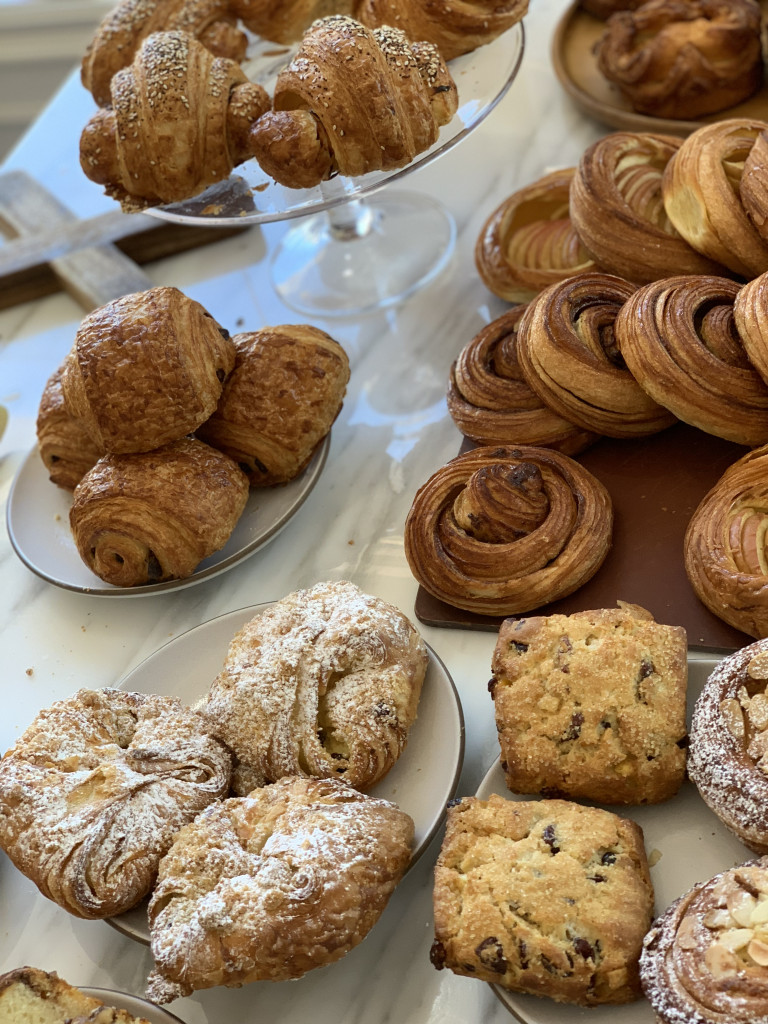
There’s less guilt attached to food, and because of that, there’s often less of a tendency to overindulge.
In the States, we have a habit of not only categorizing the food as good and bad, but restricting entire food groups from our diet. After a period of time, the desire to indulge in those foods becomes heightened and often results in binge-like behavior or having “cheat” days, which defeats restricting the food in the first place.
In France, moderation is a key philosophy of the French diet and helps reduce a lot of the complexity and negative emotions around what to eat or not eat.
They Naturally Find Balance
What’s interesting about French eating habits is that balance isn’t something that seems forced.
It happens naturally over time.
A heavier meal might be followed by something lighter the next day. A dessert might be enjoyed without the need to compensate for it later. There’s an overall awareness, but it doesn’t feel rigid or calculated.
This is very different from the all-or-nothing mindset that can show up so easily in American diet culture.
Instead of swinging between extremes, there’s more consistency. That consistency creates a sense of ease.
French Eating Habits You Can Start Adopting
If you’re looking to bring some of these habits into your own life, it doesn’t have to be complicated.
It often starts with small shifts.
Sitting down for your meals instead of eating on the go. Taking a little more time while you eat. Choosing ingredients you actually enjoy rather than just what’s convenient. Being a little more thoughtful with how you compose your meals to make sure they’re nutritionally well-rounded.
Even something as simple as removing distractions during a meal can make a difference.
Over time, these small changes begin to add up.
A Different Relationship with Food
At the heart of French eating habits is a different relationship with food altogether.
It’s not something to control or constantly analyze. It’s something to experience.
And while it may not always be easy to shift out of the habits we’re used to, especially in a culture that encourages speed and convenience, it’s something that can be practiced little by little.
Because in the end, it’s not just about what you eat. It’s about how you approach it. And that, more than anything, is where the difference lies.